.gif)
The Art of
Investing & Compounding:
Real Estate & Big Business
Days 16 - 30
Step #10.
Let's Review Our
"Compounding Chart"
.png)
The Slight Edge with a penny,
doubling your money every day:
.
Day 1) One Penny
Day 2) Double 1 pennies to 2
Day 3) Double 2 pennies to 4
Day 4) 4=8 pennies
.
Day 5) 8 pennies x 2= 16 pennies
16 doubled to 32
32=64
64 pennies doubled to $1.28
$1.28= $2.56
.
Day 10) $2.56 doubles to $5.12
$5.12 doubled to $10.12
Day 12: $10.12 doubled to $20.48
20.48 =40.96
Day 14) 40.96 doubled to $81.92
.
Day 15) $81.92 doubled to $163.84
$163.84 = $327.68
$327.68 doubled to $655.36
Day 18: 655.36=$1310.72
Day 19: $1310.72 doubled to $2621.44
.
Day 20) $2621.44 = $5242.88
Day 21: $5,242.88 =$10,485.76
$10,485.76 = $20,971.92
$20,971.92=$41,943.04
$41,943.04 = $83,886.08
.
Day 25) $83,886.08=$167,772.16
$167,772.16=$335,544.32
$335,544.32=$671,088,64
$671,088,64=$1,342,177,28
(one Million dollar mark)
$1,342,177,28=$2,684,354.56
.
Day 30) $2,684,354.56 doubles to $5,368,709,12
Action Step
Now you are on Day 21 - 30 and have about $5,242.88 - $10,485.76
.
.png)
Things YOU Can Do to Turn Your
$5,000/$10,000 into $$20K and More:
#11.
Investing in Real Estate.
.gif) Investing in real estate is something you want to do carefully.
I'm not a real-estate agent or licenced to give real estate advice. So
I want you to know that upfront.
Investing in real estate is something you want to do carefully.
I'm not a real-estate agent or licenced to give real estate advice. So
I want you to know that upfront.
I have worked with real estate in the past for many years
and have some tips to help you. But make sure to have a professional
help you when it comes time to make real decisions.
And keep in mind that there is "online real estate" available to buy too.
This would come in the form of buying and renting out websites
for business owners at a monthly fee already set up with SEO, phone
number etc...Just a thought for you but let's get back to real real estate!
One:
First off, you need to understand the square footage of a property.
Each square foot is worth $$. The important thing to understand
about real estate is that there are other properties out there nearby the
home or business you want to buy that have a similar value. By finding
these properties, you can compare price, square footage, ammenities
and things one house may have over another (such as a pool). Make
sure you compare "oranges to oranges" (if you know what I mean)! For
instance, if you're looking at a three bedroom home with two bathrooms
then compare other homes with the same.
.png)
Now find homes that have SOLD in the same area with the similar square
footage, bedrooms, bathrooms etc. Then find the actual price it sold.
Consider how close to the present that this house sold for. If it was a year ago,
prices may have drastically changed.
If it is a good comparison,
then take the selling price and divide it by the square footage (of the home
you want to buy). That will tell you what each square
foot of the home is possibly worth.
Then compare that price per square foot to the other houses selling
right now. Are the other house prices inflated or is it about right?
Consider also comparing the average price of three or more similar
houses if you're having trouble deciding. This will give you a solid
value of the house in question with a good price to work with.
Not only this! This will tell you if the house is UNDER VALUE or
TOO HIGH!
Of course, before you buy the house, the house will have an appraisal
by a professional which will give you a clue if you were on target
with your estimate. The thing is to
get your offer on the table as fast as possible and your
understanding of the real value of the house will allow you
to know if you can make a profit or not.
.png) You want to buy a house under valued and get it for
You want to buy a house under valued and get it for
cheaper then normal. When you BUY the house, this is when you
make money (not when you sell). IF you buy it at wholesale, then
you can sell it retail and earn a good return. OR you can rent it for
monthly residual. This is actually a really smart thing to do.
The reasons for this are:
1) You are increasing your monthly cash flow (money coming in monthly).
Or in terms you can understand: This is money that your investment is EARNING
FOR YOU. Yes, you can sell it and earn immediately and sometimes this
is a good idea. But consider what we just said plus all the benefits below:
2) You're house is probably gaining value in equity as the prices of living
go up. That means that one day when you sell it, you will earn a LOT
more than what you could sell it for if you sell immediately.
3) You may be able to gain benefits of keeping the house too such
as a back house, extra garage, extra emmenities etc. Also by keeping
it you potentially don't have to pay all the taxes you would if you
sold it right away. You will still have to pay regular taxes but if you
sell it right away the taxes are going to be higher (remember I'm not
a tax accountant or financial advisor, so use a
professional to get your data).
4) If you decide to sell, consider selling/ trading or "selling up" for a bigger
or better property, so you don't have to pay the extra taxes. There's a tax
loophole for this. You can find out more in the suggested books down below.
Two:
Buying houses can be an adventure. It doesn't have to be like going to
Wallmart and seeing the price tag, taking it to the counter and then just
buying it (although it can be if you lack imagination and creative strategy).
I mean, think about these options:
1) You can buy your house no money down.
2) You can have an investor buy the house and earn a "finders fee"
for it.
3) You can find a seller who is desperate and buy it FAR
below market value and be able to sell it for a massive profit.
4) You can find a seller who is willing to negotiate or be
creative. For instance, in some markets, the seller is more motivated
to sell and will consider cutting costs, setting up escrow to take
payments from you instead of you having to use a bank, or
consider "renting it to own".
There are a "hundred and one" more creative strategies and
things that can happen. I know because, my wife and I bought our house
no money down in 2004. The market has changed a lot since then however.
Back in 2008, the housing market was a buyers market
because you could buy homes for much cheaper due to
the housing panic that was happening in the US.
This is when the rich swoop in to buy when things are cheap.
The economy may be struggling and the average person may
be having trouble making ends meet but the rich are getting
richer. So remember that the "recessions" are all how you
look at it and how creative you want to be.
But today (2022), I would consider this to be sellers market. Houses
are expensive again and the seller can ask what he wants
and usually get it. This means that "motivated" sellers
are not as easy to find. They still exist but again, it's harder
to find. Most likely only the person who's "nose is
hard to the ground" will be able to "sniff out" these
motivated sellers.
.png) Most "creative" or "motivated" sellers are only found because of financial
Most "creative" or "motivated" sellers are only found because of financial
problems and immediate hardship that causes the seller
to become desperate.
Such things could be financial hardship, not able to pay their mortgage,
the death of family, possible fear of bankruptcy, threats from
an enemy, etc...
Again, these situations are much harder to find. You will only find them
if you're very diligent, focused, alert in your neighborhood and diligent.
Not only that, you will most likely need to be aggressive about letting
people know you can help them buy their home.
If you have cash, all the better. The more cash, the easier this can
happen. I see signs up all the time that say: "I will buy your home
for CASH". Of course if you can find a house going
WAY UNDER VALUE, then you can find a buyer
very easily. And this will give you room to
negotiate what you want for helping your buyer pick
up this house for so cheap.
Three:
Buying houses the traditional way (putting a 10% -20% down payment)
is of course, the normal way of doing things. But realize that there
are special programs (such as FHA Loans) out there to help you if you're a Teacher,
Law Enforcement, Fire fighter, Military, or a Healthcare professional.
This can help you out a lot. Talk to your real estate agent and see
if there are any other options open such as "First Time Home Buyer" etc.
Remember a home is a liability unless it's putting money in your pocket.
So if your strategy is to turn it into an asset at some time then
here are some tips for you:
If you're buying a rental property or anything that you
will not actually live in, then you will find the percentage you
have to put down much higher. Of course to the creative
mind, there are always ways to find a solution. If you get a special discount
for buying a house you live in AND then rent it out, this can be bank fraud and can
have bad results. But if you live in a home for a year or two (ask your real estate agent
for exact details and examine your loan) then you can rent
out your home and not be penalized.
I hope I have given you some creative ideas to work with!
Again remember I'm not a real estate agent, or licenced
to give advice on buying homes or financial advice.
So please use a professional.
#12.
Investing/Creating Big Business.
This video will open your eyes to creating a big business and
what kind of vision you have to have and what problems
you need to solve. This video is a great place to start from:
#13.
Final Tips & Thoughts.
The Third Surprise that Will Change Your Life:
.png) Most people get stuck working a job. Many more create their own jobs
Most people get stuck working a job. Many more create their own jobs
and are self employed. What takes you to the next level is if you
can start making your money work FOR YOU instead of you
working for it.
This brings you into the world of being an
investor or a big business owner. Robert Kiyosaki talks
a lot about this in his various books on wealth and wealth
education. A good place to start is with his book "Rich Dad Poor Dad".
Whether you begin investing in Online Assets, Stocks, Real Estate or
Big Business, keep in mind that your skill level is the most important
thing to develope. Don't fall for programs that you have to pay for
that promise quick success. Learn real skills and follow real
plans of action from mentors, books, ebooks and audible books where
you can learn real skills without being pushed to buy
their program in order to succeed. Not that all programs
are bad. But many won't actually teach you real skills that
are vital to your success.
If you do buy a program, make
sure that you're learning real skills and not just a
"done for you system" that does it all for you.
You will be sorry in the end from these programs.
If you're learning real skills, then you're most likely
on the best path.
Asset Strategies:

So learning to create assets is where it all starts. Assets build
your wealth and put money in your pocket. They work for you
instead of you having to work for them.
 Maybe you've played the game of Monopoly when you were young?
It's actually a great game for kids or adults in my opinion.
It teaches you how to buy properties
and then houses and eventually hotels and profit from these assets.
 It all begins after you buy your first property, and put your first
house on that property (of course in Monopoly, you have to
have all 2 or 3 matching properties before you can put a
house there). But in real life, it can start with a property
and a house or JUST an ASSET.
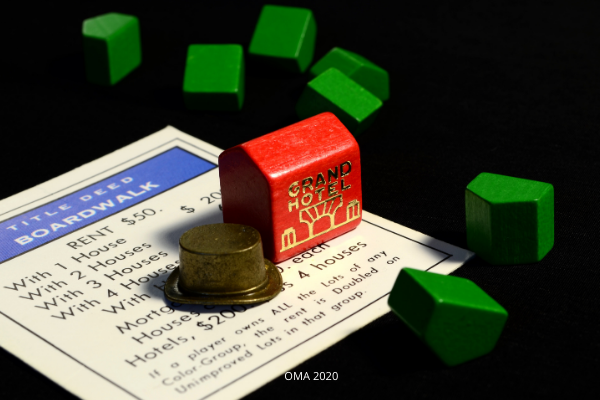 Then in the game you move from having four houses on each
property to getting a hotel. This puts you in real profit once
people start landing on your sites. In real life, earning
from your rental properties is a great strategy and then
using your profits to later invest in a hotel.
Of course, in real life, your assets can be many things, AirBNB rental
properties, owned rental properties, hotels, land, websites,
rented websites (that you own and rent), an online business,
an offline business, stocks, forex, crypto currency,
gold, silver, land with crops, etc...

In this picture above, you can see a hotel owned on the most
famous sites in Monopoly: "Parkplace". Landing on this spot will cost
you the most money if you don't own it. So you can see that three things have
priority here for income: Land, property (house or hotel) and location.
In real life these are important assets as well. But location can be
relative, ie: having a first spot on Google would also fall into
a "great location". Having tons of advertising everywhere
would also give you this same advantage.
Having VALUABLE assets that create money for you
when people buy it from you, receive a service from it or get
something of importance from it, are all part of the strategy.
Having an asset with the "right location"
(also could be lot of advertising or something that
places it forefront in a lot of peoples eyes), can make a lot
more money for you then just having an asset that is hardly
ever seen or used (if you see what I mean).
Keep in mind that if you're not careful, you can get stuck behind an
asset working for it, instead of it working for YOU!
 Playing the game of Monopoly is one thing but going out there
and buying real assets is another. My suggestion is to start
small and work your way up and have a focus on what
you're doing!
FEAR Can Make You Do GOOD & BAD Things! :
For many of you, just getting STARTED may be the scariest thing
for you! This is okay. But you NEED to stretch your comfort zone.
Many rich people push themselves outside of their
comfort zone. This allows you to grow.
Think of a baby learning to walk. What would happen do you
think, if it fell down and decided that just hurt too much
and they weren't going to try again?!
Life is about struggle and pushing beyond pain. It's about enjoying
our successes too but it's also about creating success by
going somewhere we've never gone before.
If you never walk outside, you will never experience the world.
Sure there are RISKS.
Healthy FEAR keeps you from making a bad mistake.
It keeps you from jumping off a roof or not being careful
on the side of a cliff. It warns you when you're in danger
and doing something you don't know if you can recover from.
TAKE WARNING! This is good fear.
But "BAD FEAR" puts you in constant paranoia!
It whispers fears that are just imagined and not even immediate.
It tells you "you can't do that when that still remains to be seen!"
It tells you that even though you have studied, thought
things through and have taken action to protect yourself,
that you will still fail. Have you heard that voice before?
So just to be upfront with you, I'm not a psycologists or a
licenced physician. So please consult a professional if
you're needing it. You must accept responsibility for any and all
risks that you take. I cannot be held responsible.
However, I DO hope you can
see what I'm saying here and I hope this helps you confront
your fears that are holding you back from
pursuing your dream.
A little story for you:

I'm a sailor and love the ocean. I was also planning
on sailing around the world many years ago and decided
that if I was going to survive, I needed to sail in as
many storms as possible to become efficient in bad
conditions at sea.
So whenever the weather was bad on one of my
"sailing days", I would still go down to the marina
and set sail - despite the weather. I remember one
time that the weather was so bad, I couldn't even
budge my boat out of the slip because of the
strength of the wind!
So how did I do it? How did I survive over 35 storms
at sea? Well, I always went one step at a time.
If got my boat out of the slip, then I would sail up the main channel,
then I would sail towards the breakwater and check what the
conditions were out at sea. Then I would take my first
step out behond the harbor and give myself a few minutes
to see if it was something I could handle. If it was too much,
I came back. Interesting enough, I never was comfronted
with more than I could handle (well almost)
This is to say though, that I'm glad I had a very good sailor friend
with me on one particular trip. And it's a good thing I did,
as the waves got to 20 feet for about 10 hours and the wind
hit 70 miles an hour (hurricane strengh). The waves were
like buildings rolling up to us and then under us as we
flew over the tops of the waves down into the trough, way below.
Maybe you can imagine this with me! Well, honestly,
I was very frightened. I don't think I had the skills to handle
this storm on my own (not at that time). But my friend did.
He was an Alaskan fisherman and had
been through ten times worse than this (and I knew it).
And with his skill, our work and Gods help, we got home. We were
completely beaten up emotionally, physically and in
any other way you could think of.
We took on the storm one wave at a time.
One situation at a time. And with skill, a little
luck and God's help, we got through.
Am I glad I went through that storm? I sure am.
It was the most beautiful thing I've ever seen
AND the most scariest!
Would I do it again? Not willingly.
Did I learn a lot? A ton. Did it make
me a better sailor. For sure. I learned
more skills on that day then years of
typical days at sea had taught me.
And this is how life is. If you don't get out there
and take on some challenges, then you'll never
learn anything. Does this mean to be stupid?
Not at all. That's what healthy FEAR is for:
To warn you that what you are facing is possibly
more than you can handle. And if it logically
IS more than you can handle, then step away
and quickly! (Again, this is just my opinion).
Make sense?
.png) JUST Get STARTED!
JUST Get STARTED!
So all that said, just get started one step at a time with what extra
money you have (money that won't hurt you or cause you or your
family to starve if you lost it). Face your fears and learn
how to become a better investor.
Yes, you might have to fail to get better. Just move forward and
learn all you can and then step out!
Realize that it ALL starts from creating a little money, investing it
and creating more and so forth until you have grown it
and compounded it to a big enough sum where it is in
some form working and earning enough money for you to
live from.
 Eventually, you can reach your dreams! Just keep in mind that
spending your whole life for it, only to enjoy it when your old
is not a great goal. It's better than not having what you need
when you're old, but keep in mind strategies that will
help you create wealth in better time. Of course, the
faster the time, often creates equal risk. But I'm sure
you can find a balance.
If you're interested to know more,
then you may want to read Tim Ferris's book,
"The 4 Hour Work Week" to see more!
All the best to you!
I hope this course has really helped you get started
achieving your dreams.
And as always, let me know if you need anything!
~Albie
Looking forward to meeting you!
|
|
|
|